First Aid Medical Kit: What Every Emergency Kit Should Include
Accidents and injuries can happen without warning. A minor cut at home, an injury at the workplace, or a more serious bleeding incident outdoors can quickly become an emergency. Having a first aid medical kit that contains the right supplies allows immediate care to begin while professional medical assistance is being arranged. The goal is not to replace medical treatment, but to ensure that essential first-aid resources are available when every second matters.
Why Is First-Aid Preparedness Important?
Emergencies often occur when there is little time to find the necessary supplies. Being prepared can help people respond quickly, calmly, and appropriately.
First-aid preparedness is particularly important in places where injuries are more likely to occur, including:
- Homes and residential buildings
- Offices and workplaces
- Construction and industrial sites
- Schools and sports facilities
- Vehicles and travel bags
- Hiking, camping, and outdoor locations
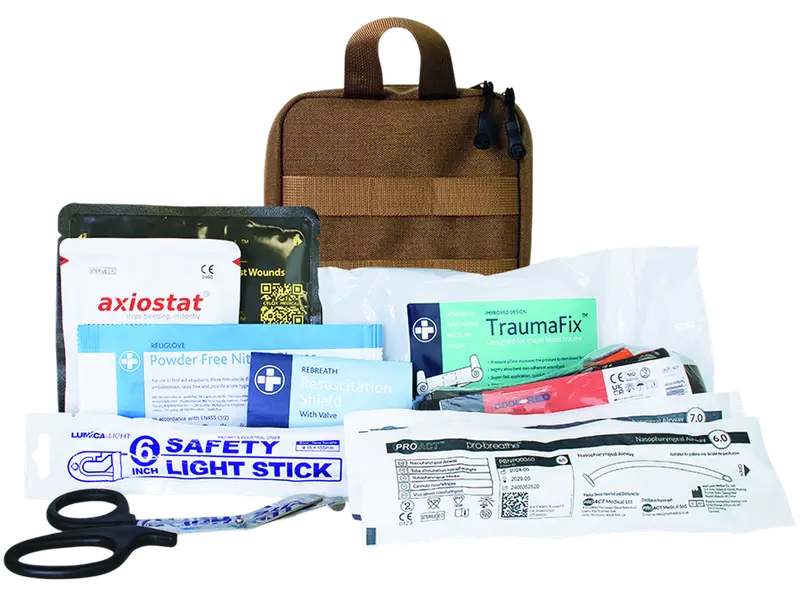
The contents of an emergency kit should be selected according to the environment, the activities involved, and the potential risks. A basic household kit may be sufficient for everyday minor injuries, while workplaces and high-risk environments may require more advanced trauma-care products.
Essential Supplies for Everyday First Aid
A well-equipped kit should contain supplies that can address common injuries while also providing support during more serious situations.
Adhesive Bandages
Adhesive bandages are useful for small cuts, scratches, blisters, and superficial abrasions. They provide a simple way to protect minor wounds from dirt and external contamination.
Sterile Gauze
Sterile gauze pads are important for covering wounds and absorbing blood. They can also be used with medical tape or bandages to secure a dressing over an injured area.
Medical Tape
Medical tape helps secure gauze, dressings, and other wound-care materials. Different types of tape may be suitable for different situations, so the selection should match the intended use.
Disposable Gloves
Disposable gloves are an important part of first-aid preparedness. They provide a protective barrier for the person providing assistance when there is contact with blood or other bodily fluids.
Antiseptic Supplies
Appropriate antiseptic wipes or solutions may be included for cleaning around minor wounds. Always follow the directions provided with the product and avoid using substances that are not intended for wound care.
Scissors and Tweezers
Small medical scissors can help cut tape, gauze, or clothing when necessary. Tweezers may be useful for removing superficial splinters or small visible debris.
Cold Packs
Instant cold packs can provide temporary relief from swelling and discomfort associated with certain minor injuries. They are particularly practical for sports kits, travel kits, and workplace emergency supplies.
Preparing for Serious Bleeding
Minor injuries are not the only situations that require first-aid preparedness. Serious bleeding can occur because of accidents, falls, sharp-object injuries, machinery-related incidents, or other forms of trauma.
Severe bleeding requires immediate attention. Applying appropriate first-aid measures and seeking professional medical assistance as quickly as possible are critical.
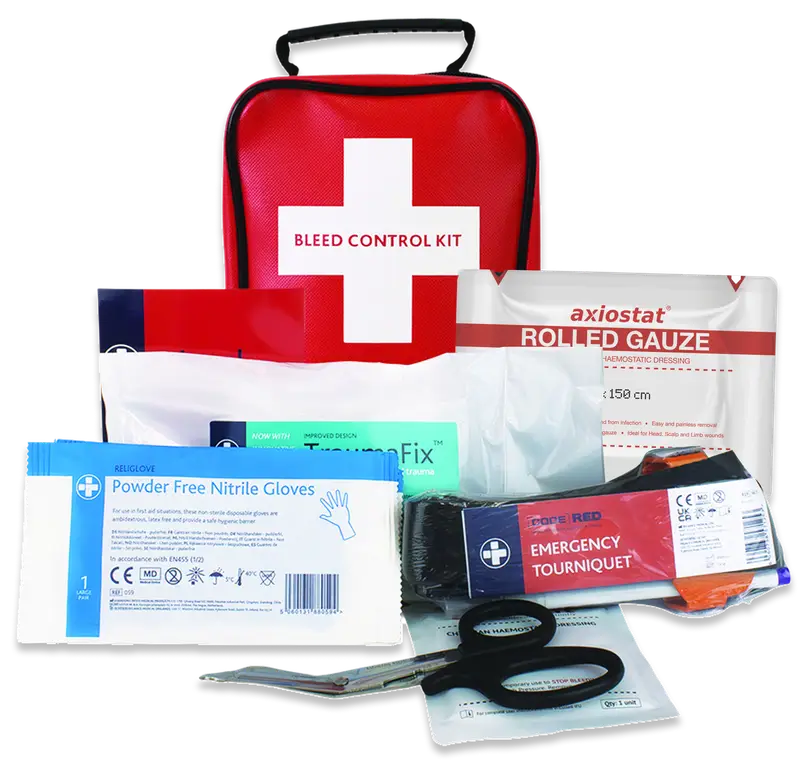
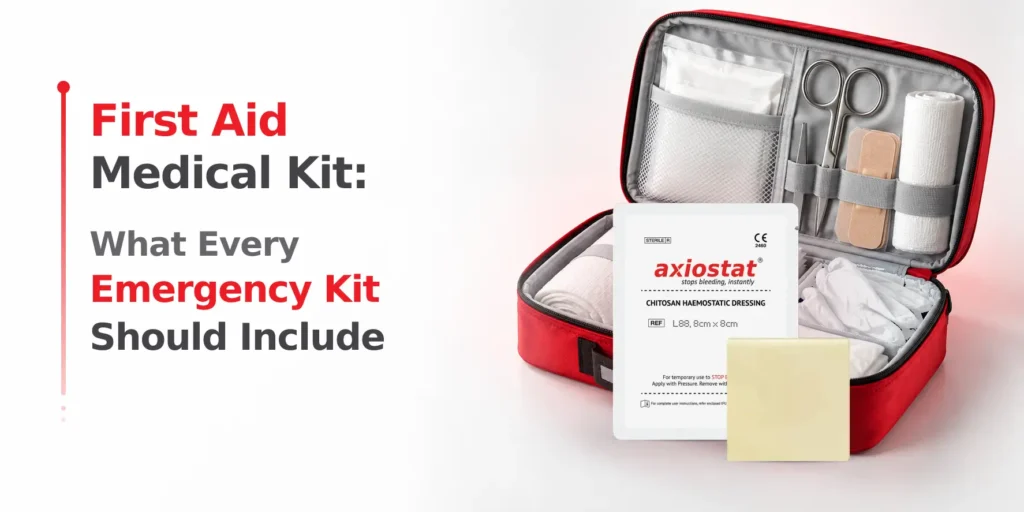
Hemostatic Dressing can be an important addition to emergency bleeding-control supplies, particularly in environments where the risk of traumatic injury is higher. Axiostat Hemostatic Dressing is made with 100% Chitosan and utilizes Protonated Bioadhesive Technology(PBT)Ⓡ.
The technology is designed to promote adhesion at the bleeding site and support the body’s natural clotting process.
Having an appropriate Hemostatic Dressing available can provide an additional option when managing serious bleeding until advanced medical care is available.
Choosing the Right Kit for Different Environments
Not every emergency kit needs to contain the same supplies. The items in the kit should match the dangers that are likely to occur in that specific place.
Home
A home kit should focus on injuries like small cuts, skin scrapes, burns and twisted ankles. Basic supplies for treating wounds like gloves, gauze, tape and cleaning products should be easy to reach.
Workplace
Workplaces can have dangers depending on the kind of job being done. Offices, storage areas, factories and building sites can all have types of injuries. Employers need to think about the dangers that exist in their workplace to decide what emergency items are needed.
Vehicle
A small emergency kit can be helpful when driving in a car or other vehicles. It should have supplies for treating wounds and items that can stay in good condition while being moved around and exposed to different weather.
Outdoor Activities
Hiking, camping walking through the woods and playing sports can lead to falls, cuts and other injuries. A small kit with supplies for treating wounds and controlling bleeding can be very useful when help might not be close by.
How to Maintain Emergency Supplies
Just buying an emergency kit is not enough. The supplies inside need to be checked to make sure they are still good to use.
Think about these steps:
- Check the dates when products expire.
Replace items after they are used. - Look at the containers to see if they are broken or dirty.
- Keep the supplies stored as the maker says.
- Put the kit in a place that’s clean, dry and easy to find.
- Make sure people who are responsible know where it is.
- Check the items often, as the dangers may change.
It is also important to know how each item is used. Learning some first-aid can help people do a better job when an emergency happens.
When Should You Seek Professional Medical Care?
First aid is intended to provide immediate support, not replace professional medical treatment.
Medical assistance should be sought for serious or uncontrolled bleeding, deep or extensive wounds, suspected fractures, significant burns, loss of consciousness, breathing difficulties, or any injury that appears severe or life-threatening.
For serious bleeding, emergency medical services should be contacted immediately while appropriate first-aid measures are provided.
Frequently Asked Questions
1. What are the most important items to include in an emergency kit?
Essential supplies typically include adhesive bandages, sterile gauze, medical tape, disposable gloves, antiseptic supplies, scissors, tweezers, cold packs, and appropriate bleeding-control products.
2. Why is a Hemostatic Dressing useful for emergency preparedness?
A Hemostatic Dressing can provide an additional option for managing significant bleeding. It can be particularly valuable in situations where immediate professional medical assistance may not be readily available.
3. What is Protonated Bioadhesive Technology(PBT)Ⓡ?
Protonated Bioadhesive Technology(PBT)Ⓡ is the technology used in Axiostat Hemostatic Dressing. It is designed to support adhesion at the bleeding site and assist with bleeding control.
4. How often should emergency supplies be checked?
Emergency supplies should be reviewed regularly. Check applicable expiry dates, inspect packaging for damage, and replace any items that have been used, expired, or compromised.
5. Can first-aid supplies replace professional medical treatment?
No. First-aid supplies are intended to provide immediate support until appropriate medical care is available. Serious injuries, uncontrolled bleeding, and other medical emergencies require prompt professional attention.
Conclusion
A properly prepared first aid medical kit is an important part of emergency readiness. From basic bandages and sterile gauze to advanced bleeding-control solutions such as a Hemostatic Dressing, having appropriate supplies readily available can help support a faster response during unexpected injuries. Axiostat Hemostatic Dressing, made with 100% Chitosan and powered by Protonated Bioadhesive Technology(PBT)Ⓡ, provides an additional option for bleeding-control preparedness. Regularly checking supplies and ensuring people know how to use them can make emergency preparedness more effective.
Disclaimer: For informational purposes only. Product availability, indications, and regulatory status may vary by country. Refer to locally approved labeling and instructions for use.