Timely training in the proper use of bleeding control kits during an emergency may be life-saving. The number one cause of avoidable death in traumatic injuries is excessive bleeding. Depending on how severe the trauma was, this amount of blood loss could result in death within minutes of sustaining an injury.
Everyone needs to learn how to use emergency bleeding control kits correctly, irrespective of whether or not he/she has any training, because one can lose his/her life within just 1 minute if he/she loses 50% of their blood supply! Proper knowledge of how to use equipment can help anyone responding in an emergency act immediately. With easy access to bleeding control kits that contain all the needed equipment, you will be able to control bleeding right away and provide proper assistance to your patients.
A bleed control kit is the general term used to describe any kit with a specific set of equipment used to control excessive bleeding due to serious injury. They are also known as haemorrhage bleeding control kits, depending on where the kit is used.
Bleeding control kits are designed for use in life-threatening emergencies, unlike first aid kits, which are designed for minor injuries. Examples of life-threatening emergencies that would require a bleeding control kit include severe traumatic wounds, advanced (large amounts) bleeding from wounds, and/or wounds that a basic bandage cannot contain.
Bleed control kits are also commonly used in the following scenarios:
As a result of growing demands for emergency preparedness, many organizations and public places have begun adding stop the bleed kits to their current inventory of medical supplies to allow non-medical personnel to help in the event of an emergency (i.e., by using the kit contents).
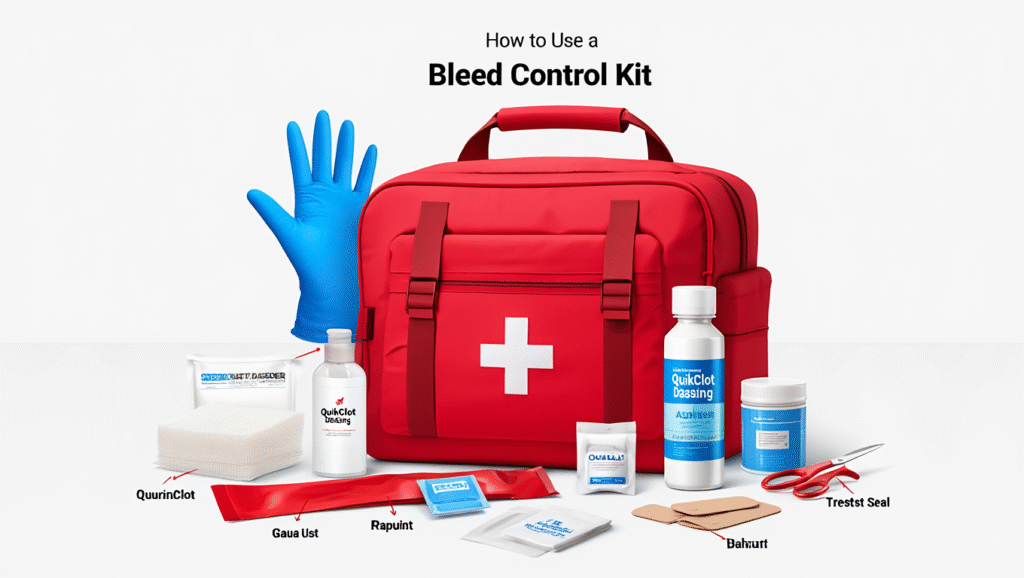
Before using any bleeding control kit, it is important to understand what tools are inside and how they help. Each item has a specific purpose in managing severe bleeding.
Combat Medical Training: Stopping Severe Parental Bleeding: An EMT’s Quick Reference Guide to Immediate Treatment
– Tourniquet—a device used to control bleeding when standard controlling measures fail to stop bleeding.
– Trauma Dressing/Pressure Dressing – maintains pressure on a bleeding area.
– Gloves serve to protect the responder and the patient from infection. Always be sure to protect yourself first when controlling bleeding.
– Trauma Shears – allow you to quickly cut through clothes to expose the wound; unless you can see the injury, you cannot treat it.
– Bleeding Control Instruction Card – a simple guide to help you understand how the bleeding control kit works and use it properly, especially in a stressful situation.
Act fast and remain calm. Follow the following procedures for bleeding control:
Your safety is always the priority when attempting to control bleeding.
Locating the exact source helps you apply the right bleed control method quickly.
This is one of the most critical bleeding control steps. Direct pressure combined with hemostatic gauze can stop bleeding effectively.
This will make sure the control of the bleeding continues after your hands are no longer pressing on the site.
A tourniquet is an essential part of any hemorrhage control kit.
Continued management is as important as the above-mentioned steps.
In many places, someone may get critically injured, which would increase their chance of survival when a bleeding control/stop the bleed kit is nearby.
Several examples of instances when someone could experience life-threatening bleeding are:
If you know how to control bleeding effectively, then the injured person does not go into shock, giving them a much better chance to survive.
Having a bleeding control kit can make the difference between a life lost and a life saved. Consequently, by knowing what type of bleeding control kit to use, you can properly aid anyone in your environment if they need assistance due to an emergency.
To be able to help save someone’s life at any time is reason enough to store your bleeding control kit in a place where you will always have easy access to it (whether at home, at work, or while travelling).
Bleed kits are several different tools used in handling severe (massive) haemorrhaging during an emergency.
Identifying the reason for the bleeding and then applying the gauze to help with clotting, pressing it with a bandage, and finally applying a tourniquet.
Place the gauze first, then press on it until the bleeding stops; otherwise, apply the tourniquet above the wound.

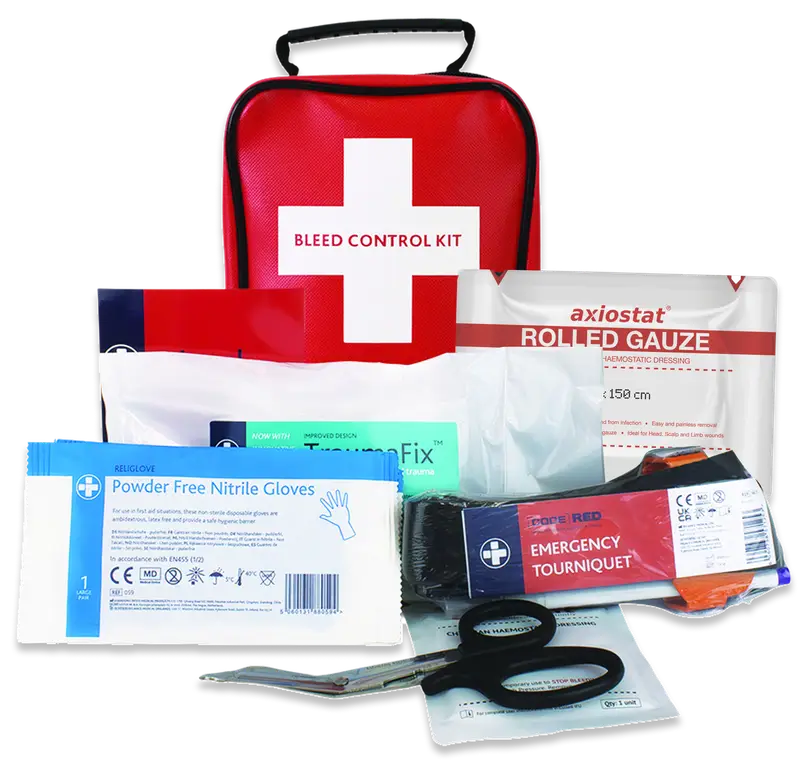
Axiostat® Rolled Gauze – 7.6cm x 150cm
Religlove – Nitrile Examination Gloves – Large – Pair
Universal shears large 7.6″
TraumaFix Dressing Sterile Including Pressure Pad
CODE RED Emergency Tourniquet
Chest Seal
Bleed Control Guidance Leaflet
1
2
1
1
1
1
1
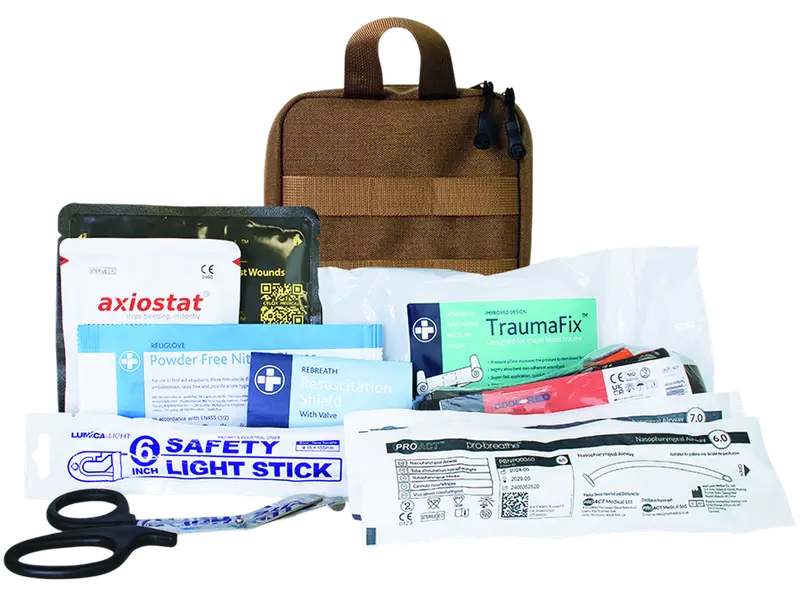
Axiostat® Z-Fold Gauze – 7.6cm x 300cm
Chest Seal (Contains 2 Chest Seals)
TraumaFix Dressing Sterile Including Pressure Pad 10cm x 18cm
CODE RED Emergency Tourniquet
Rebreath Mouth to Mouth Resuscitation Device with Valve
Religlove Nitrile Examination Gloves Large (Pair)
6″ Military Grade High Intensity Cyalume Lightstick White
PRO-Breathe Nasopharyngeal Airway, Size 6
PRO-Breathe Nasopharyngeal Airway, Size 7
Universal shears large 7.6″
1
1
1
1
1
1
1
1
1
1
Axiostat® Vascular Patch
V35
V55
3.5cm x 3.5cm
5cm x 5cm
Box of 15
Box of 10
Axiostat® Rolled Gauze
Axiostat® Z-Fold
Axiostat® Z-Fold
Axiostat® Patch
Axiostat® Patch
Axiostat® 4-Ply Gauze
Axiostat® Single Ply Gauze
Axiostat® Rolled Gauze
6510-72-057-0462
6510-72-057-0460
6510-72-057-2313
6510-72-057-0464
–
6510-72-057-2350
6510-72-057-0461
–
L150
MIL300
MIL150
L88 / MIL88
M85
L2020
L1010 / MIL1010
L100
7.6cm x 150cm
7.6cm x 300cm
7.6cm x 150cm
8cm x 8cm
8cm x 5cm
20cm x 20cm
10cm x 10cm
7.6cm x 100cm
Individual
Individual
Individual
Box of 10
Box of 10
Box of 10
Box of 10
Individual


For Femoral and Radial Access Closures

For Femoral and Radial Access Closures