
Kulyassa, P.M., Németh, B.T., Ruzsa, Z., Szűk, T., Ehrenberger, R., Balázs, B., Kákonyi, K.M., Becker, D., Merkely, B.P. and Édes, I.F., 2026. Simplified radial artery haemostasis: using non-compressive dressings—the Radial…
Read More
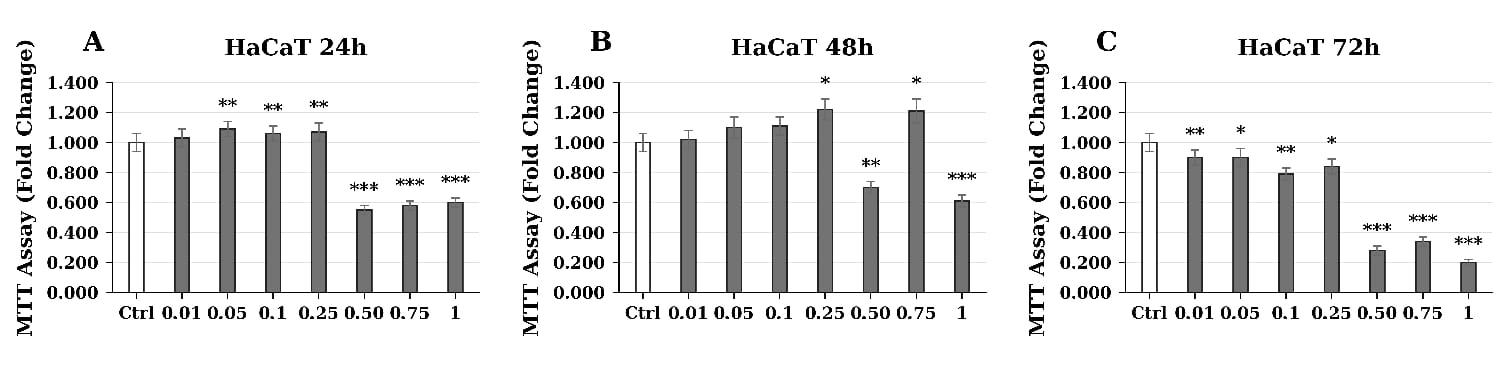
Kulyassa, P.M., Németh, B.T., Ruzsa, Z., Szűk, T., Ehrenberger, R., Balázs, B., Kákonyi, K.M., Becker, D., Merkely, B.P. and Édes, I.F., 2026. Simplified radial artery haemostasis: using non-compressive dressings—the Radial…
Read More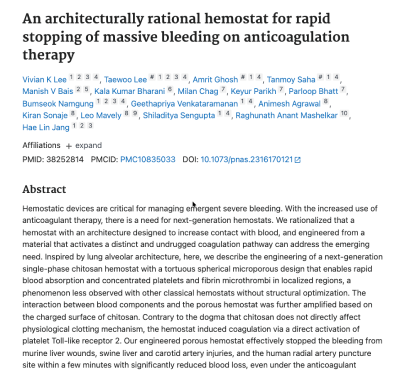
Lee VK, Lee T, Ghosh A, Saha T, Bais MV, Bharani KK, Chag M, Parikh K, Bhatt P, Namgung B, Venkataramanan G. An architecturally rational hemostat for rapid stopping of…
Read More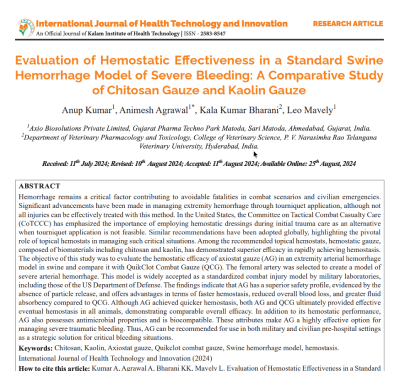
Kumar A, Agrawal A, Bharani KK, Mavely L. Evaluation of Hemostatic Effectiveness in a Standard Swine Hemorrhage Model of Severe Bleeding: A Comparative Study of Chitosan Gauze and Kaolin Gauze.…
Read More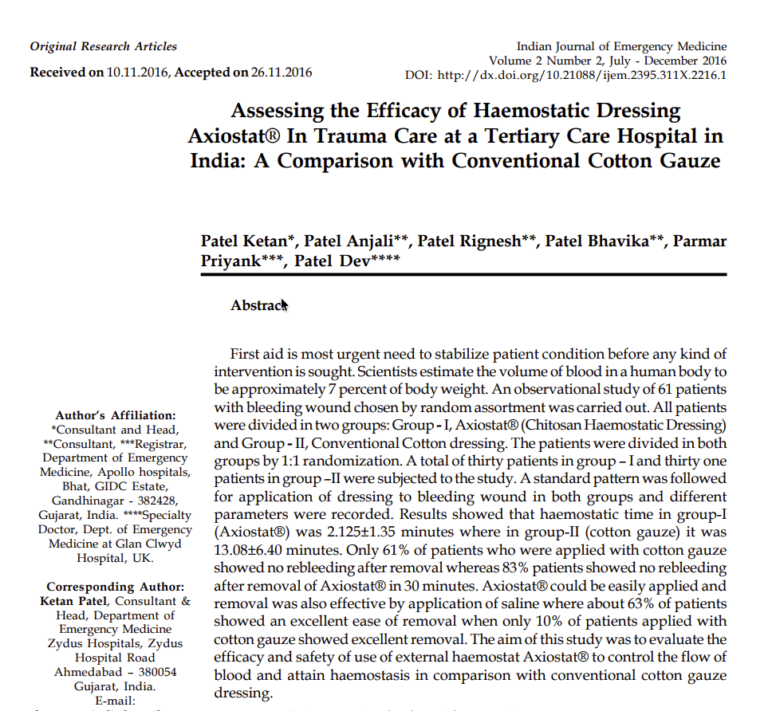
Ketan P, Anjali P, Rignesh P, Bhavika P, Priyank P, Dev P. Assessing the efficacy of haemostatic dressing Axiostat® in trauma care at a tertiary care hospital in India: A…
Read More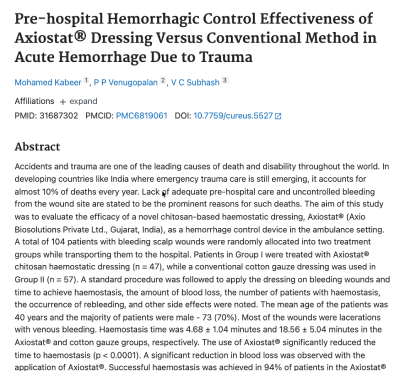
Kabeer M, Venugopalan PP, Subhash VC. Pre-hospital hemorrhagic control effectiveness of Axiostat® dressing versus conventional method in acute hemorrhage due to trauma. Cureus. 2019 Aug 29;11(8).
Read More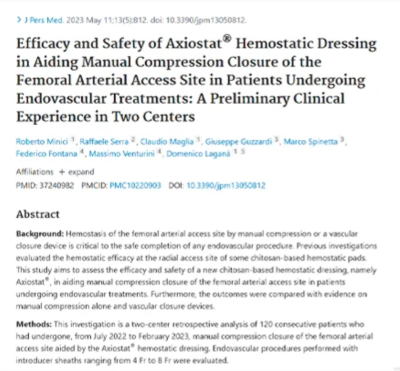
Minici, R., Serra, R., Maglia, C., Guzzardi, G., Spinetta, M., Fontana, F., Venturini, M. and Laganà, D., 2023. Efficacy and Safety of Axiostat® Hemostatic Dressing in Aiding Manual Compression Closure…
Read More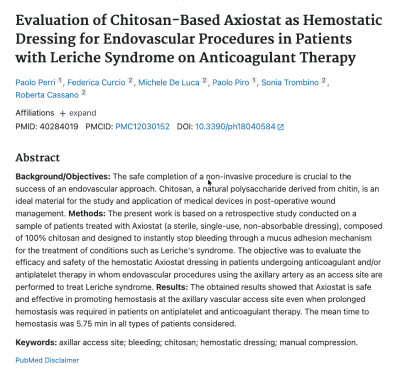
Perri, P., Curcio, F., De Luca, M., Piro, P., Trombino, S. and Cassano, R., 2025. Evaluation of Chitosan-Based Axiostat as Hemostatic Dressing for Endovascular Procedures in Patients with Leriche Syndrome…
Read More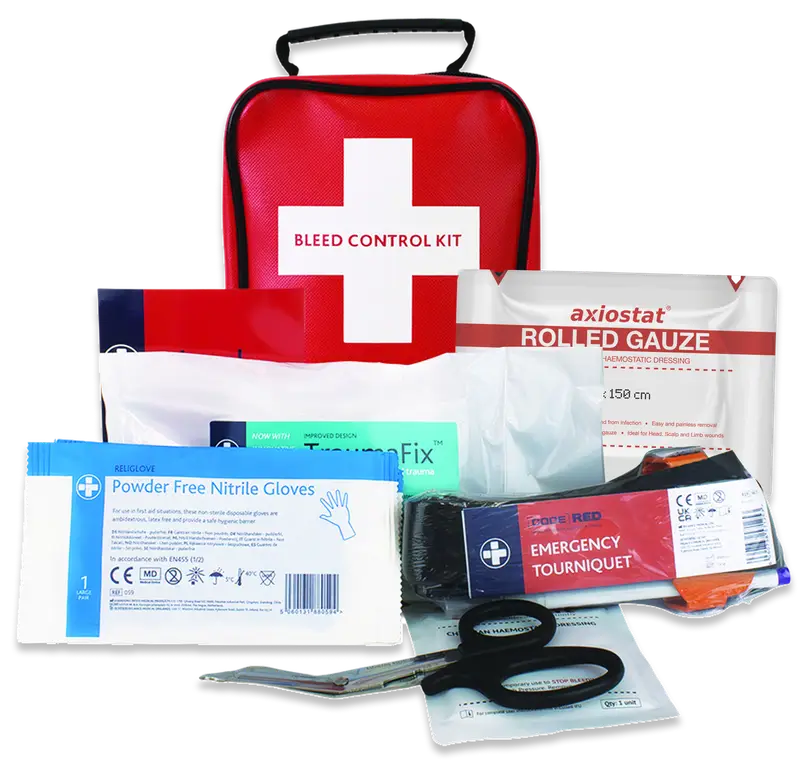
Axiostat® Rolled Gauze – 7.6cm x 150cm
Religlove – Nitrile Examination Gloves – Large – Pair
Universal shears large 7.6″
TraumaFix Dressing Sterile Including Pressure Pad
CODE RED Emergency Tourniquet
Chest Seal
Bleed Control Guidance Leaflet
1
2
1
1
1
1
1
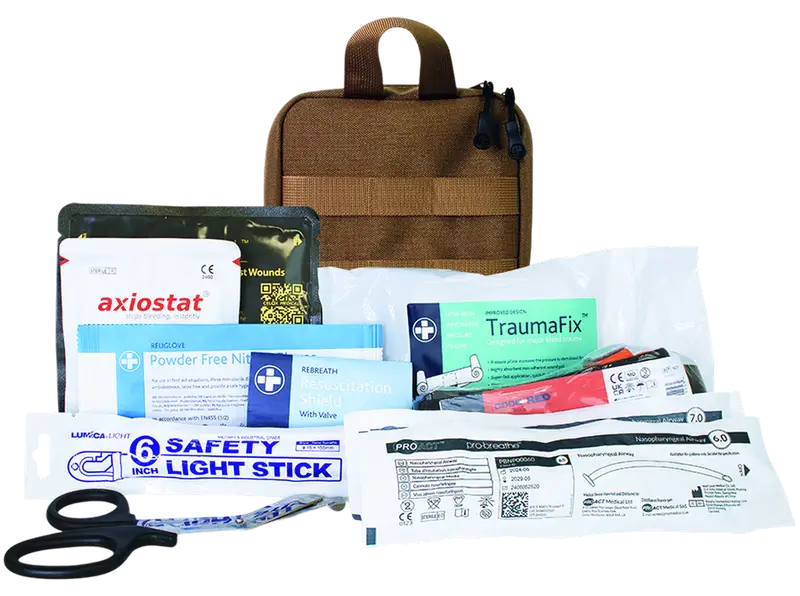
Axiostat® Z-Fold Gauze – 7.6cm x 300cm
Chest Seal (Contains 2 Chest Seals)
TraumaFix Dressing Sterile Including Pressure Pad 10cm x 18cm
CODE RED Emergency Tourniquet
Rebreath Mouth to Mouth Resuscitation Device with Valve
Religlove Nitrile Examination Gloves Large (Pair)
6″ Military Grade High Intensity Cyalume Lightstick White
PRO-Breathe Nasopharyngeal Airway, Size 6
PRO-Breathe Nasopharyngeal Airway, Size 7
Universal shears large 7.6″
1
1
1
1
1
1
1
1
1
1

For Femoral and Radial Access Closures
For Femoral and Radial Access Closures