Hemostatic gauze is a specialized wound dressing designed to help control bleeding in emergency and trauma-care situations. Unlike regular gauze, which primarily absorbs blood and supports direct pressure, hemostatic gauze contains materials that provide additional bleeding-control mechanisms.
Choosing the right hemostatic gauze is important for emergency medical services (EMS), healthcare professionals, first responders, and organizations preparing for traumatic injuries.
However, not all hemostatic gauze products work in the same way. Differences in active materials, dressing formats, clinical evidence, and intended applications can influence product selection.
This guide explains how hemostatic gauze works, compares the main types, and highlights the factors to consider when choosing a bleeding-control dressing for trauma care.
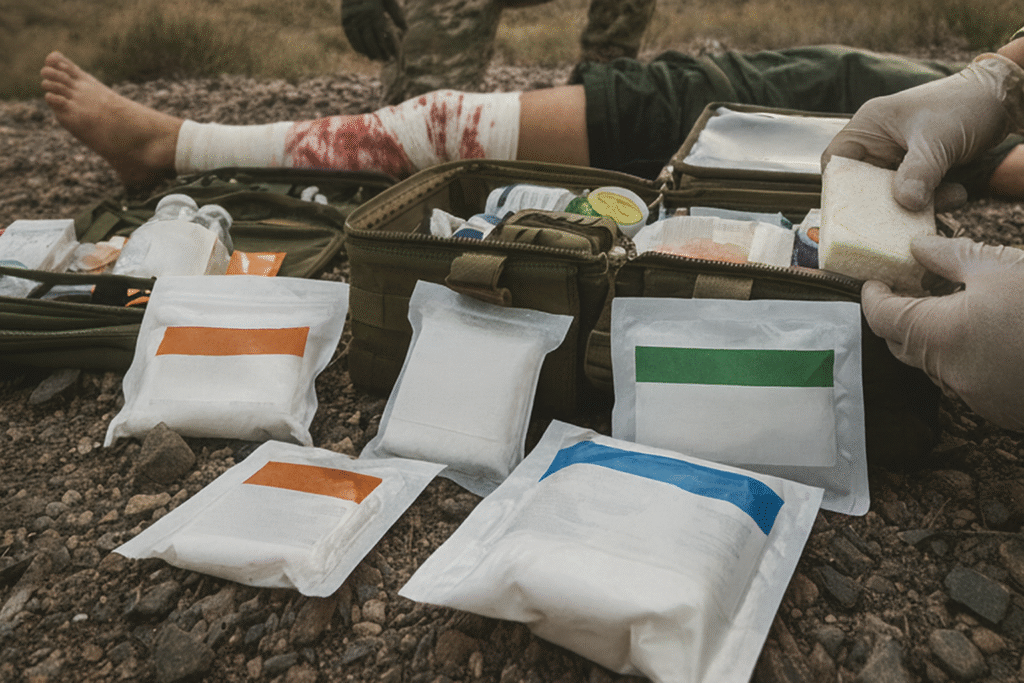
Hemostatic gauze is a medical dressing designed to support hemostasis, the process by which bleeding is controlled.
It is commonly used in emergency bleeding management, particularly for suitable external wounds that require more than a simple dressing.
The effectiveness of hemostatic gauze depends on several factors, including its active ingredient, the injury’s location, correct application, direct pressure, and the patient’s condition.
Hemostatic gauze should be used according to applicable emergency-care protocols and the manufacturer’s instructions.
To understand the broader role of these products, read our guide on when to use a hemostatic wound dressing in first aid.
Hemostatic gauze works by combining the physical benefits of a gauze dressing with the bleeding-control properties of specialized materials.
The mechanism varies depending on the hemostatic agent used.
Chitosan is a naturally derived biopolymer used in various hemostatic products.
Chitosan-based materials can interact with blood components and adhere to the wound surface, helping form a local barrier that supports bleeding control.
Axiostat uses chitosan-based technology in its hemostatic gauze products.
To understand the product’s mechanism, explore Axiostat’s Protonated Bioadhesive Technology.
Kaolin is a mineral used in certain hemostatic dressings.
Kaolin-containing products help activate the body’s intrinsic coagulation pathway, supporting clot formation at the bleeding site.
Both chitosan-based and kaolin-based gauze are used in trauma care, but they have different mechanisms of action. Selecting between them should depend on product-specific evidence, approved indications, training, and institutional protocols.
Understanding the differences between hemostatic materials is important when evaluating available products.
Feature | Chitosan-Based Gauze | Kaolin-Based Gauze |
Primary material | Chitosan biopolymer | Kaolin mineral |
Main mechanism | Bioadhesion and interaction with blood components | Activation of the intrinsic coagulation pathway |
Common applications | Selected external trauma and emergency bleeding situations | Selected external trauma and emergency bleeding situations |
Available formats | Depends on manufacturer | Depends on manufacturer |
Product selection | Based on evidence, indications, handling, and training | Based on evidence, indications, handling, and training |
Neither material should automatically be described as superior for every injury. Clinical performance varies by product, application technique, injury type, and available evidence.
Choosing appropriate hemostatic gauze requires considering the intended clinical application rather than focusing only on product claims.
Different bleeding situations require different management approaches.
Minor external bleeding may respond to conventional gauze and direct pressure, while severe traumatic bleeding may require advanced hemorrhage-control measures.
For life-threatening bleeding, emergency medical assistance is essential. A tourniquet may be indicated promptly for severe limb bleeding.
Hemostatic gauze is generally considered for appropriate external wounds where direct pressure or wound packing is indicated.
The active material affects how a dressing supports bleeding control.
Chitosan-based products rely on their bioadhesive properties and interactions with blood components, while kaolin-based products support the body’s coagulation pathway.
When comparing products, consider their approved indications, supporting evidence, and suitability for the intended emergency-care environment.
Evidence is an important consideration when selecting medical products.
Look for:
Review Axiostat’s clinical evidence for information about its hemostatic technology and supporting research.
Hemostatic gauze is available in different formats designed for specific handling and application requirements.
Common formats include rolled gauze and Z-fold gauze.
The appropriate format depends on the wound characteristics, intended application, product instructions, and responder training.
During emergencies, responders need products they are trained to use effectively.
Review packaging design, handling requirements, dressing integrity, and application instructions.
Removal procedures also vary between products and should follow the manufacturer’s approved instructions and appropriate medical supervision.
Hemostatic gauze may be stored in emergency kits for extended periods.
Before selection, verify:
These factors are particularly important for hospitals, ambulances, industrial facilities, and organizational emergency kits.
Both formats are used in trauma-care settings, but their configurations differ.
Rolled gauze is supplied in a continuous roll format.
It can be useful for suitable dressing and wound-management applications, depending on the product’s instructions.
Axiostat offers a rolled hemostatic gauze product, including the L150 format measuring 7.6 × 150 cm.
Explore Axiostat Rolled Hemostatic Gauze.
Z-fold gauze is packaged in an accordion-style configuration.
This arrangement allows the gauze to be dispensed from the pack in sections and may support organized handling in emergency-response settings.
Axiostat offers Z-fold hemostatic gauze, including the MIL300 format measuring 7.6 × 300 cm.
Explore Axiostat Z-Fold Hemostatic Gauze.
Which format is better?
Neither format is universally preferable. Product choice should consider wound characteristics, user training, institutional requirements, and the manufacturer’s instructions.
Hemostatic gauze may be used in selected bleeding-control situations, including emergency and prehospital care.
Potential settings include:
Hemostatic gauze should not be considered a substitute for emergency medical evaluation.
For a broader introduction to emergency techniques, read five essential bleeding-control actions.
Axiostat develops chitosan-based hemostatic products intended for bleeding-control applications in trauma and emergency care.
Its product range includes rolled gauze, Z-fold gauze, and specialized hemostatic dressings.
Axiostat uses its Protonated Bioadhesive Technology (PBT®), designed to support bleeding control through bioadhesion.
Axiostat offers different dressing configurations for various application and handling requirements, including rolled and Z-fold gauze.
Axiostat products are offered for professional and organizational bleeding-control needs, including trauma kits and emergency-response equipment.
The Axiostat product range includes sterile dressings, with published specifications and clinical evidence available for review.
Product performance, regulatory status, shelf life, and removal instructions should be verified for the specific model and market before purchasing or use.
Explore Axiostat Hemostatic Gauze to review product features, specifications, and available formats.
Choosing a hemostatic dressing without reviewing its intended use can create unnecessary risks.
Common mistakes include:
Selecting appropriate products and ensuring responder training are both important parts of trauma preparedness.
Hemostatic gauze is used to help control bleeding in appropriate wound-care and trauma situations. It contains materials that support hemostasis when used with recommended application techniques.
Regular gauze primarily absorbs blood and provides a surface for direct pressure. Hemostatic gauze incorporates materials that provide additional mechanisms to support bleeding control.
Two commonly used categories are chitosan-based and kaolin-based hemostatic gauze. The materials work through different mechanisms.
There is no universal answer. The appropriate choice depends on clinical evidence, approved indications, the injury, and applicable medical protocols.
Hemostatic gauze may be used for selected severe external bleeding injuries, depending on the wound and relevant protocols. Life-threatening bleeding requires immediate emergency medical assistance.
Pressure duration depends on the specific product’s approved instructions and applicable medical protocols. Rescuers should follow appropriate training and should not assume the same timing applies to every product.
Rolled gauze is packaged as a continuous roll, while Z-fold gauze is arranged in an accordion-style configuration. Both formats are used in bleeding management, depending on product-specific indications and user requirements.
Choosing the right hemostatic gauze involves more than selecting a dressing that promises rapid bleeding control.
The hemostatic material, clinical evidence, dressing format, intended application, user training, and storage requirements all influence product selection.
Understanding these factors can help healthcare professionals, emergency responders, and organizations make informed decisions about their bleeding-control supplies.
Axiostat offers chitosan-based hemostatic gauze solutions in multiple formats for trauma and emergency-care applications.
Explore Axiostat Hemostatic Gauze Solutions
Discover available products, technical specifications, and bleeding-control options for your professional or organizational needs.
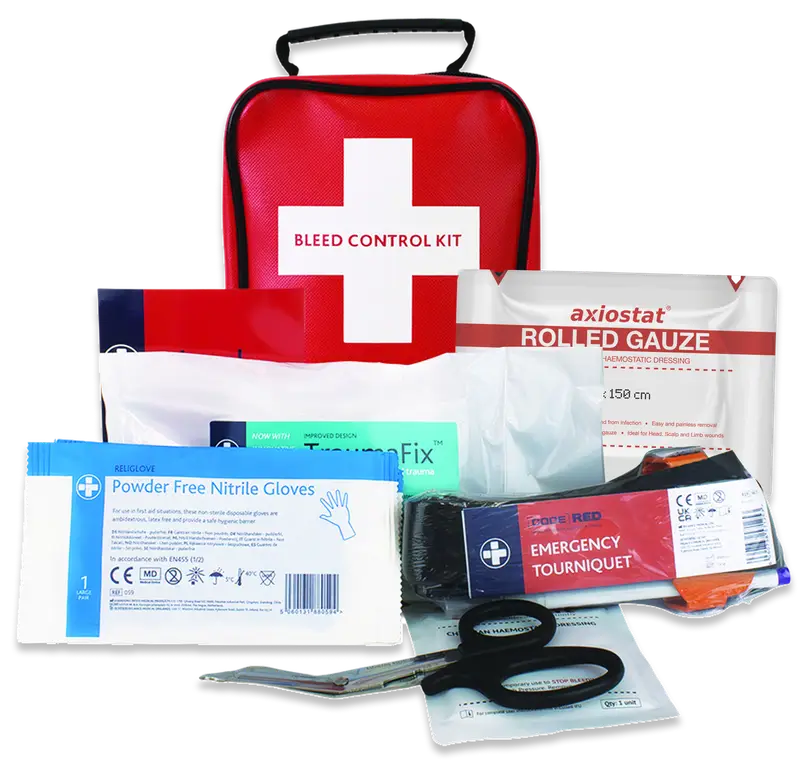
Axiostat® Rolled Gauze – 7.6cm x 150cm
Religlove – Nitrile Examination Gloves – Large – Pair
Universal shears large 7.6″
TraumaFix Dressing Sterile Including Pressure Pad
CODE RED Emergency Tourniquet
Chest Seal
Bleed Control Guidance Leaflet
1
2
1
1
1
1
1
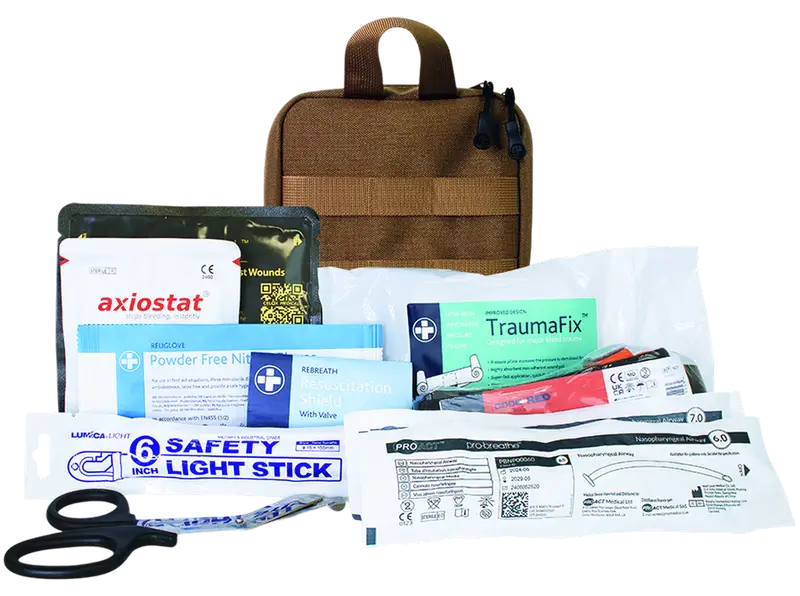
Axiostat® Z-Fold Gauze – 7.6cm x 300cm
Chest Seal (Contains 2 Chest Seals)
TraumaFix Dressing Sterile Including Pressure Pad 10cm x 18cm
CODE RED Emergency Tourniquet
Rebreath Mouth to Mouth Resuscitation Device with Valve
Religlove Nitrile Examination Gloves Large (Pair)
6″ Military Grade High Intensity Cyalume Lightstick White
PRO-Breathe Nasopharyngeal Airway, Size 6
PRO-Breathe Nasopharyngeal Airway, Size 7
Universal shears large 7.6″
1
1
1
1
1
1
1
1
1
1
Axiostat® Vascular Patch
Axiostat® Vascular Patch
V35
V55
3.5cm x 3.5cm
5cm x 5cm
Box of 15
Box of 10
Axiostat® Rolled Gauze
Axiostat® Z-Fold
Axiostat® Z-Fold
Axiostat® Patch
Axiostat® Patch
Axiostat® 4-Ply Gauze
Axiostat® Single Ply Gauze
Axiostat® Rolled Gauze
6510-72-057-0462
6510-72-057-0460
6510-72-057-2313
6510-72-057-0464
–
6510-72-057-2350
6510-72-057-0461
–
L150
MIL300
MIL150
L88 / MIL88
M85
L2020
L1010 / MIL1010
L100
7.6cm x 150cm
7.6cm x 300cm
7.6cm x 150cm
8cm x 8cm
8cm x 5cm
20cm x 20cm
10cm x 10cm
7.6cm x 100cm
Individual
Individual
Individual
Box of 10
Box of 10
Box of 10
Box of 10
Individual
Whatsapp us

For Femoral and Radial Access Closures
For Femoral and Radial Access Closures